



Introduction
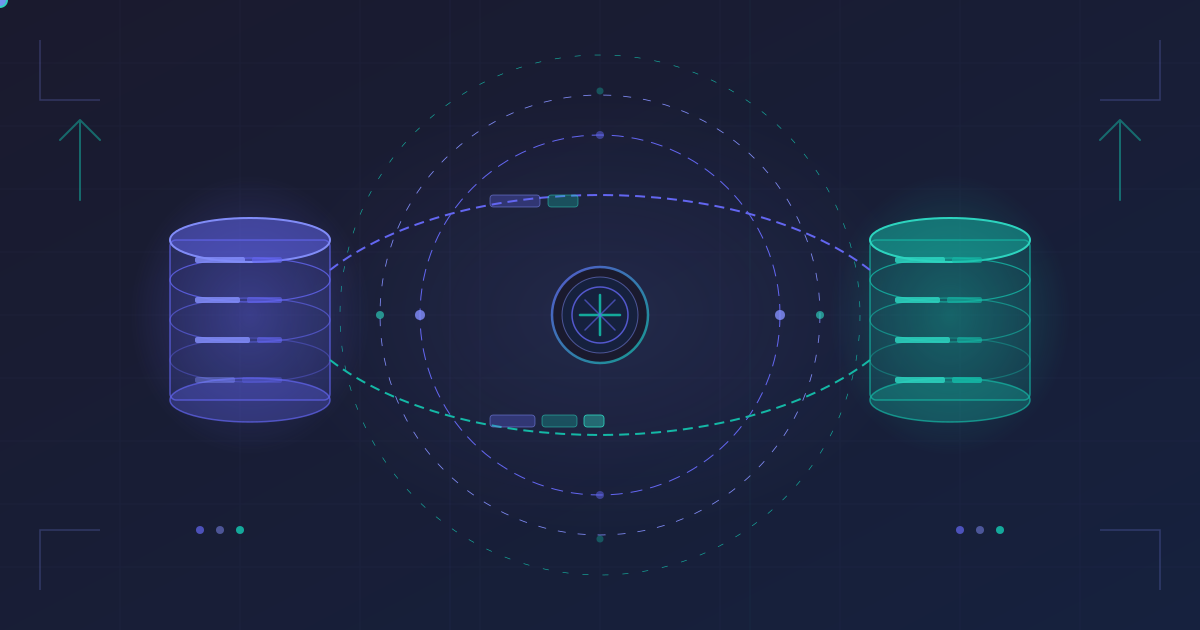
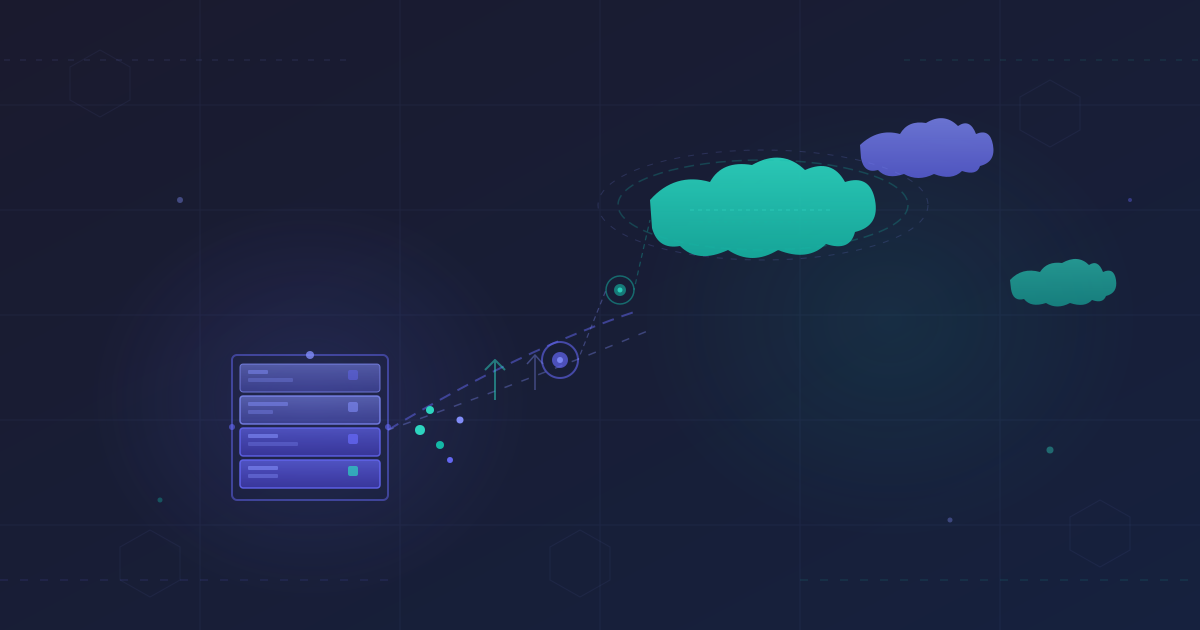
Cloud Migration Strategies for Legacy Systems represents a critical capability for modern enterprise organizations.
This comprehensive guide explores proven strategies for migrating legacy enterprise systems to the cloud with minimal disruption and maximum benefits, providing practical implementation strategies and best practices for enterprise environments.
Content Section 1
Key Concepts
Implementation details and technical patterns…
// Example implementation
class CloudMigrationStrategiesforLegacySystems {
  constructor(config) {
    this.config = config;
  }

  async execute() {
    // Implementation logic
    const result = await this.performOperation();
    return result;
  }

  async performOperation() {
    // Core functionality
    return { success: true };
  }
}
Content Section 2
Best Practices
Key recommendations for successful implementation:
- Start with assessment: Understand current state before implementing changes
- Implement incrementally: Roll out changes in phases to minimize risk
- Monitor continuously: Track metrics and KPIs throughout the process
- Document thoroughly: Maintain comprehensive documentation for audits and knowledge transfer
Content Section 3
Common Challenges
Challenge 1: Implementation complexity
Solution: Break down into manageable components and tackle systematically.
Challenge 2: Resource constraints
Solution: Prioritize based on business impact and risk assessment.
Challenge 3: Change management
Solution: Engage stakeholders early and communicate progress regularly.
Implementation Roadmap
Phase 1: Foundation (Weeks 1-4)
- Complete initial assessment
- Define requirements and success criteria
- Establish governance structure
- Begin stakeholder engagement
Phase 2: Implementation (Weeks 5-12)
- Deploy core components
- Integrate with existing systems
- Test functionality and performance
- Train team members
Phase 3: Optimization (Ongoing)
- Monitor performance metrics
- Gather user feedback
- Refine processes based on learnings
- Scale as needed
Monitoring and Metrics
Track these key metrics to measure success:
class MetricsCollector {
  async collectMetrics() {
    return {
      uptime: await this.getUptime(),
      errorRate: await this.getErrorRate(),
      responseTime: await this.getResponseTime(),
      throughput: await this.getThroughput(),
    };
  }

  async analyzeMetrics(metrics) {
    const analysis = {
      status: 'healthy',
      alerts: [],
      recommendations: [],
    };

    if (metrics.errorRate > 0.01) {
      analysis.status = 'degraded';
      analysis.alerts.push('High error rate detected');
    }

    return analysis;
  }
}
Security Considerations
Ensure security throughout implementation:
- Implement least privilege access controls
- Encrypt data in transit and at rest
- Maintain comprehensive audit logs
- Regular security assessments and updates
- Incident response procedures
Integration Patterns
Pattern 1: Synchronous Integration
async function synchronousIntegration(request) {
  const validation = await validateRequest(request);
  if (!validation.valid) {
    throw new Error('Invalid request');
  }

  const result = await processRequest(request);
  return result;
}
Pattern 2: Asynchronous Integration
async function asynchronousIntegration(request) {
  // Queue for background processing
  await queue.enqueue({
    type: 'process_request',
    data: request,
    timestamp: new Date(),
  });

  return { status: 'queued', requestId: request.id };
}
Testing Strategy
Comprehensive testing approach:
describe('CloudMigrationStrategiesforLegacySystems', () => {
  let instance;

  beforeEach(() => {
    instance = new CloudMigrationStrategiesforLegacySystems(testConfig);
  });

  it('should execute successfully', async () => {
    const result = await instance.execute();
    expect(result.success).toBe(true);
  });

  it('should handle errors gracefully', async () => {
    const invalidInput = { invalid: true };
    await expect(instance.execute(invalidInput))
      .rejects.toThrow('Invalid input');
  });
});
Conclusion
Successfully implementing cloud migration strategies for legacy systems requires careful planning, systematic execution, and ongoing optimization.
Key takeaways:
- Comprehensive planning is essential for success
- Implementation should be incremental and measured
- Continuous monitoring enables rapid issue detection
- Documentation and training ensure long-term sustainability
By following these guidelines and best practices, organizations can successfully implement cloud migration strategies for legacy systems while minimizing risks and maximizing value.
Remember that cloud migration strategies for legacy systems is an ongoing journey that requires continuous attention, refinement, and adaptation to evolving business needs and technology landscapes.