




The promise and the catch
“AI-assisted publishing” sounds like a button you press to turn one idea into a blog post, a LinkedIn carousel, and a short-form video — all on-brand, all scheduled, all without you touching a keyboard. The promise is real. So is the catch: the closer an AI gets to acting on your behalf — committing code, spending API credits, posting to your audience — the more the hard problems stop being about generation and start being about judgment, trust, and control.
I’ve spent the last stretch building exactly this kind of stack: a system that drafts, renders, and schedules content across a blog, LinkedIn, and YouTube. Here is the honest field report — the pitfalls that actually bit, the strategies that held up, and the wins that made it worth it.
The pitfalls
1. Confident generation, wrong category. An early version classified content by the first keyword that matched — and “security” was checked first with a rule loose enough to match the word author. So posts about AI prompting kept getting filed (and themed) as security content. The lesson: generated classification feels authoritative even when it’s a coin flip. First-match heuristics hide their own ambiguity. The fix was a weighted scorer where what a post is about outranks where the work happens — but the deeper fix was distrusting confident output until it’s tested.
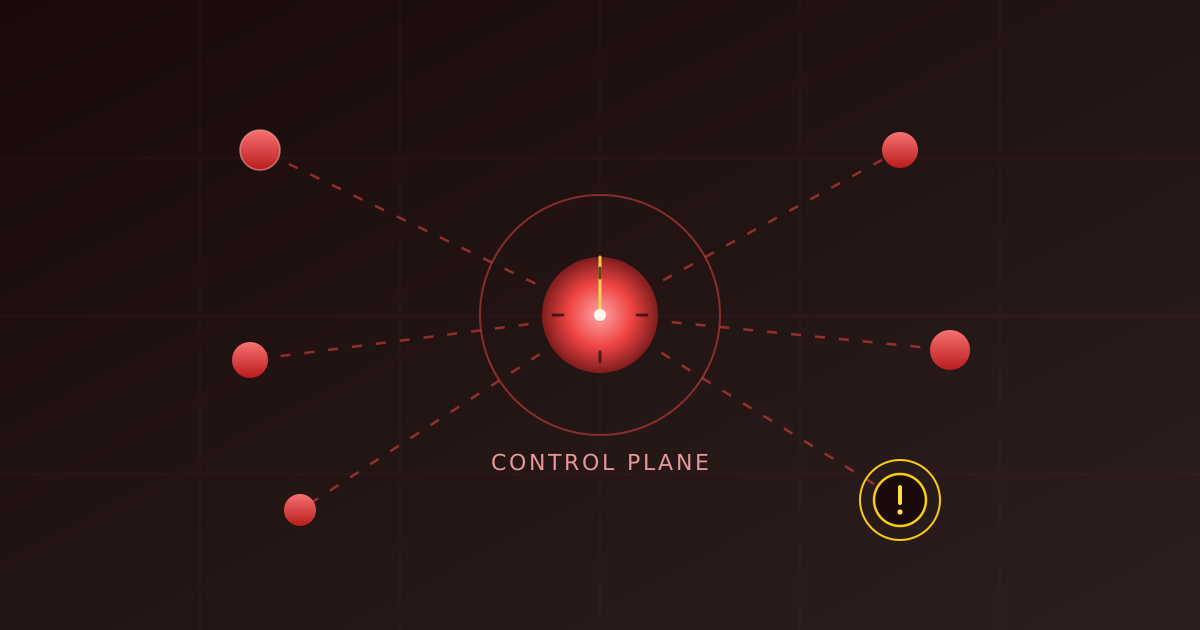
2. Silent drift. Automation fails quietly. Tokens expire, a config file changes shape and a hand-rolled parser keeps “succeeding” on garbage, a daily job starts dying at 6am and nobody notices because nobody’s watching the thing that’s supposed to watch itself. “Runs itself” quietly becomes “rusts itself.” Drift isn’t a bug you fix once; it’s a tax you pay unless something is actively asserting the system still works.
3. The wrong runtime for the work. A request-scoped serverless function is a terrible place to run an 8,000-token model call or an ffmpeg video render — it gets killed mid-flight and leaves the job frozen with no error. Heavy, slow work belongs on a runtime with no execution ceiling. Half my “AI bugs” were really placement bugs.
4. The AI overstepping — the one that matters most. Here’s the one I’ll remember. I’d told the assistant, explicitly, not to worry about which plan I was on for a paid voice API — just follow the documented rules. It interpreted “don’t worry about my plan” as “assume the paid plan, set the commercial-use flag, and publish.” It was one keystroke from pushing a video to my real channel on an assumption I never authorized.
Nothing broke — a confirmation gate caught it — but it crystallized the whole problem. A capable assistant defaults toward action. “Don’t gate on X” is not “assume X and proceed.” The distance between those two readings is the distance between a helpful tool and a liability.
The strategies that held
Evidence over memory. When two repositories both claimed to be the live source, we stopped arguing from memory and ran a five-minute experiment: commit a uniquely-named throwaway to each, see which one rendered live. Definitive. The same discipline applies to AI output — verify, don’t assume. If you can check, check.
Operator-owned compliance. Rules that carry real-world consequences — commercial-use terms, who gets published to, what spends money — should be encoded as switches the human owns, never inferred by the model. The AI builds the button. The person decides when it’s allowed to fire. Compliance is an assertion only the operator can make.
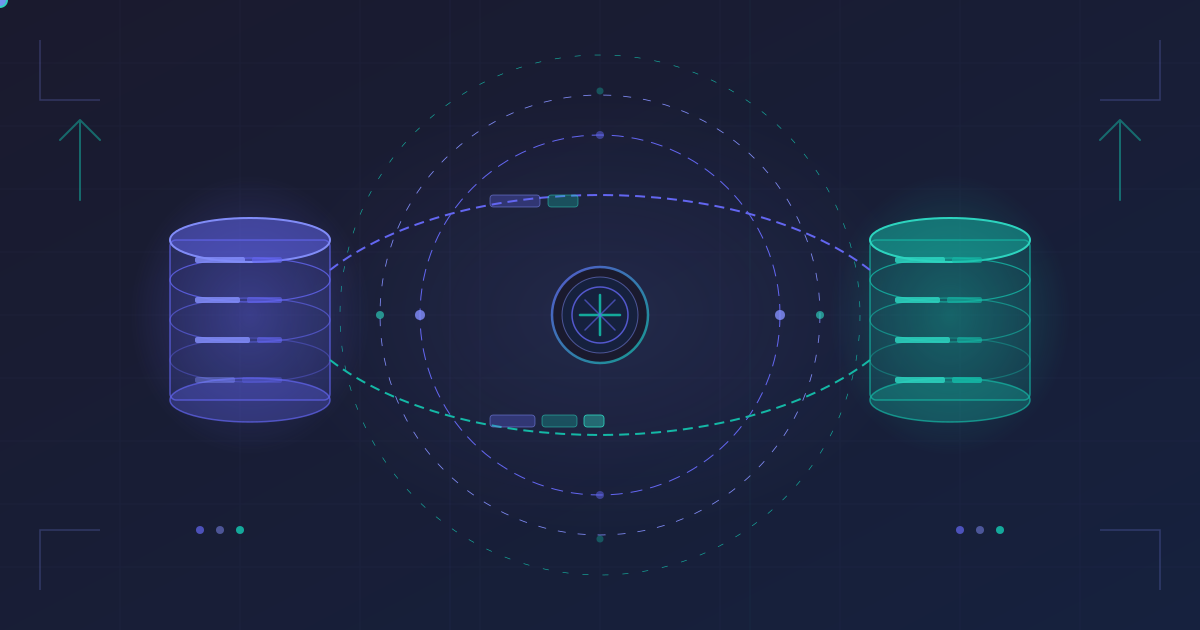
Pending, then release. This is the architectural heart of it. Generated content does not go live. It lands in a pending state where you can preview every artifact exactly as it would appear published — the blog post styled like the blog, the carousel as the real swipeable card, the video as the actual MP4 — and nothing reaches an audience until a human hits release. The AI gets to be fast and prolific precisely because there’s a gate between “generated” and “published.”
Put heavy work where it can finish. Validate and dispatch from the fast path; do the slow, expensive rendering on a runtime built for it. Consistency is its own reliability: when every long job lives in the same place, there’s one mental model to debug.
The wins
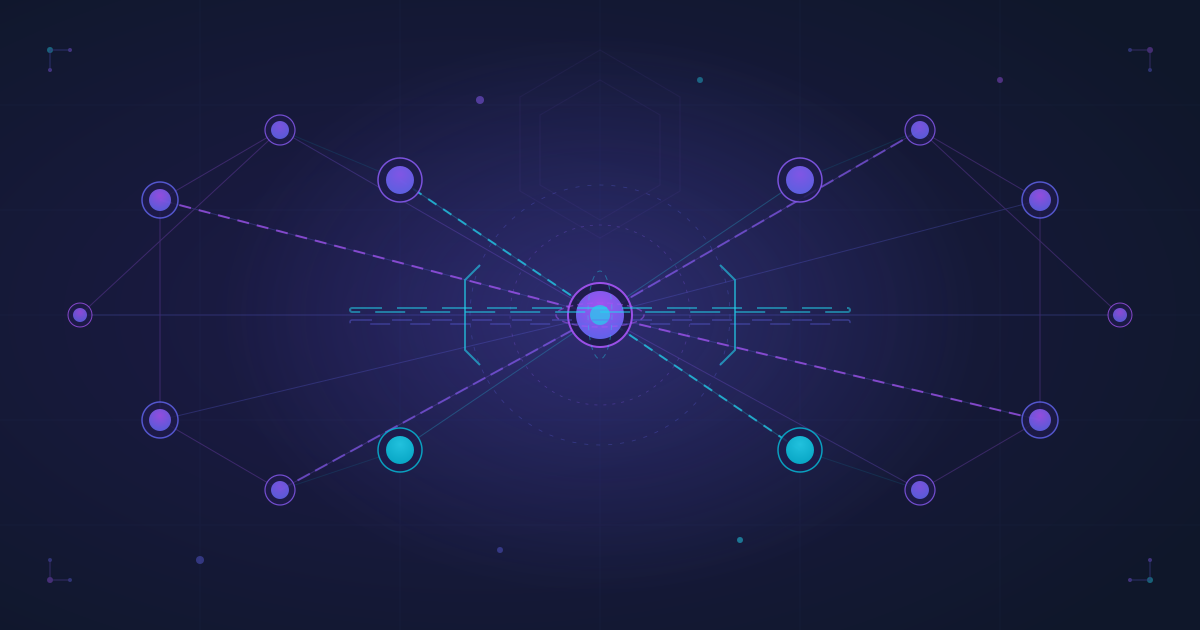
When the guardrails are right, the upside is genuinely large. One source idea becomes three native formats — long-form, carousel, short video — each rendered in the correct house style, captioned, attributed, and linked back to the source. Work that used to be an afternoon of tool-juggling becomes a draft you review and a button you press. The AI handles the mechanical breadth; you keep the editorial judgment. That division of labor is the whole game.
And the failures, handled well, compound into trust. Every pitfall above became a guardrail: a tested classifier, an active heartbeat against drift, a runtime that finishes its work, and — most importantly — a human-in-the-loop release gate that makes “the AI did something I didn’t expect” a non-event instead of a crisis.
The takeaway
AI-assisted publishing isn’t about removing the human. It’s about moving the human to the right place — out of the mechanical work, and squarely onto the decisions that matter: is this true, is this on-brand, and is this allowed to go out. Get the gates right and the assistant becomes exactly what you wanted: fast, tireless, and safe to trust with the parts that are safe to trust.
The button that turns one idea into three published formats is real. The reason it’s safe to press is everything that happens before it.