


What is Mixture of Experts (MoE)?
If you’ve been following the AI space, you’ve likely heard about Mixture of Experts (MoE). But what is it really, and why did I choose it as the foundation for Cortex?
The Core Concept
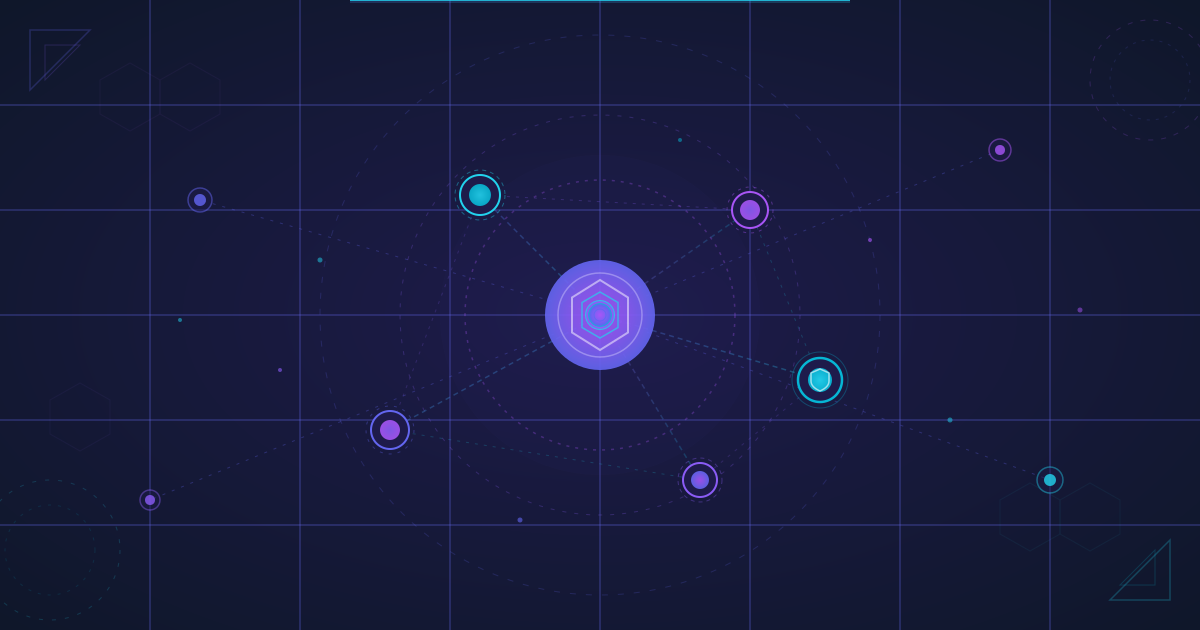
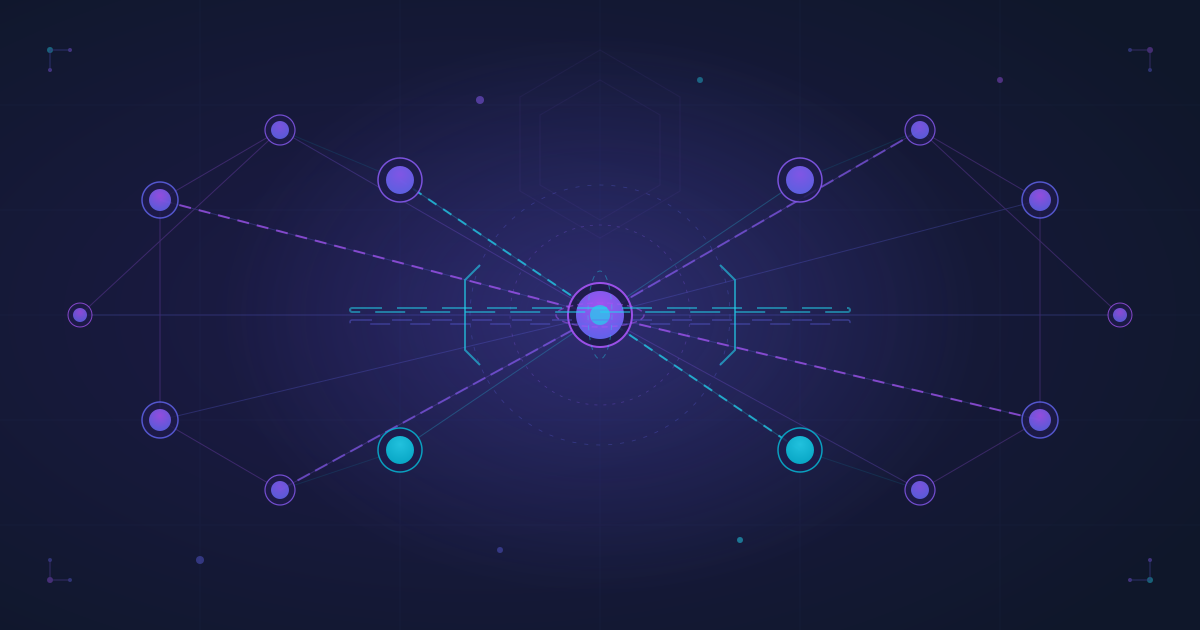
Mixture of Experts is an ensemble learning technique where:
- Multiple specialist models (experts) focus on different aspects of a problem
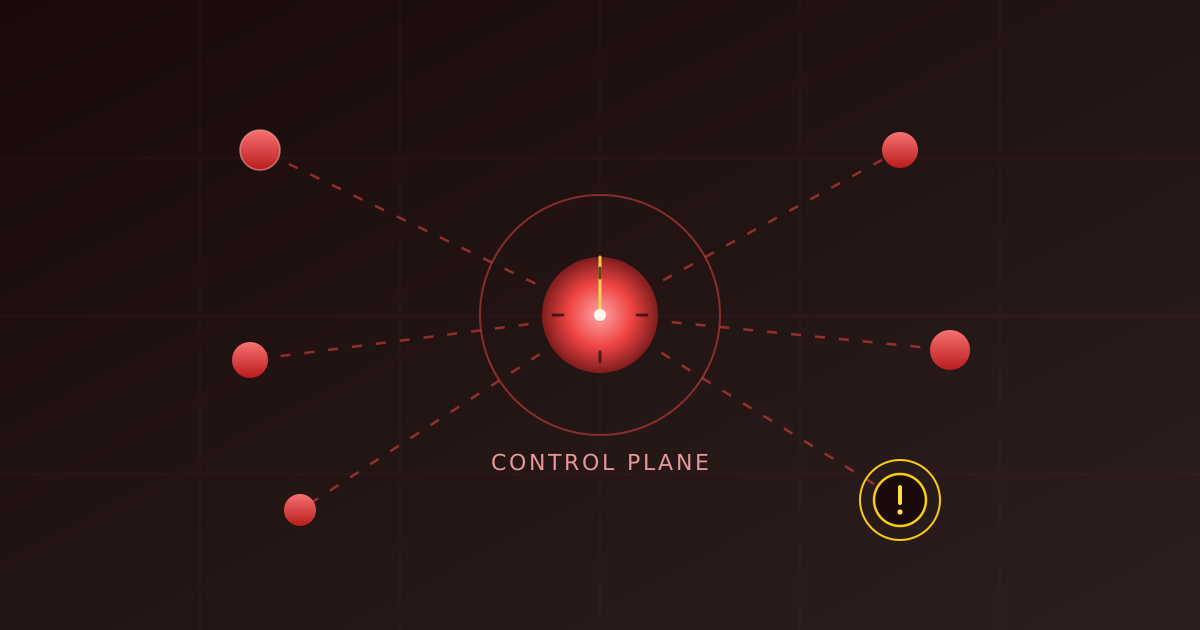
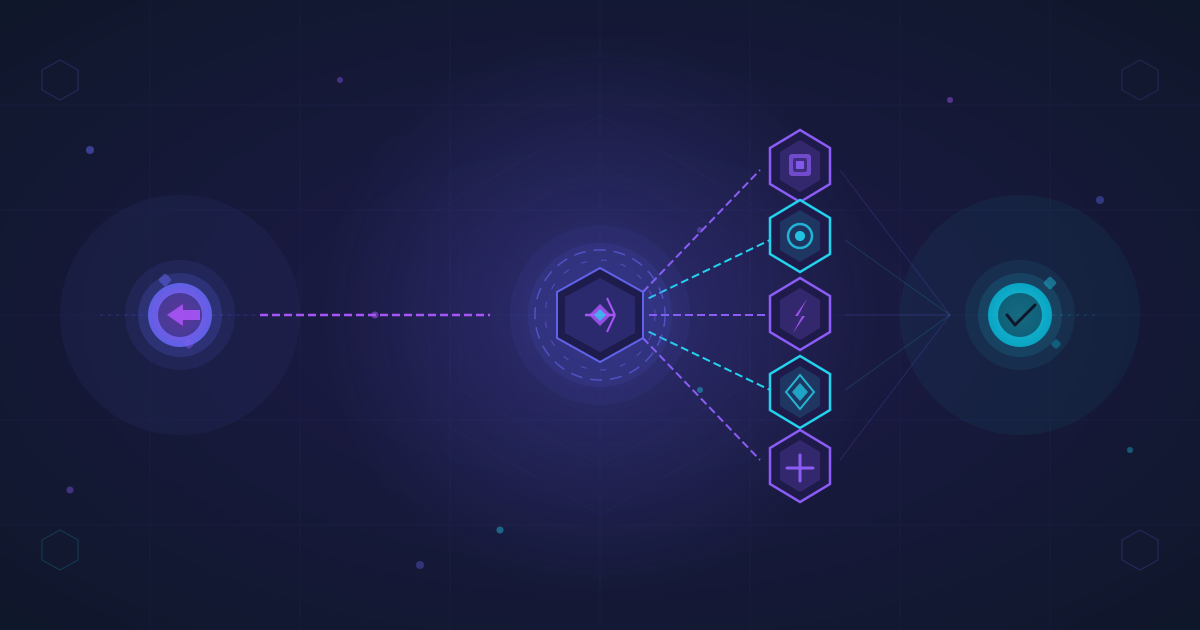
- A gating network (coordinator) decides which expert(s) to use for each input
- The system learns which experts are best for which types of tasks
- Performance improves over time as routing becomes more intelligent
Think of it like a hospital: You don’t see a heart surgeon for a broken bone. The triage system (gating network) routes you to the right specialist (expert).
Why MoE for Software Development?
Traditional automation tools use static rules:
IF task contains "security" THEN run_security_scan()
IF task contains "test" THEN run_tests()
This breaks down with complex, ambiguous tasks like:
- “Fix the authentication bug causing login failures”
- “Optimize the database queries in the user service”
- “Implement rate limiting with proper error handling”
These tasks need:
- Context understanding - What kind of problem is this?
- Intelligent routing - Which expert should handle it?
- Learning from outcomes - Did we route correctly?
That’s where MoE shines.
Cortex’s MoE Architecture
The Gating Network: Coordinator Master
Cortex’s coordinator master acts as the gating network. It:
- Analyzes incoming tasks using pattern matching and semantic analysis
- Calculates confidence scores for each specialist master
- Routes to the best expert based on learned patterns
- Tracks outcomes to improve future routing
The Experts: Specialist Masters
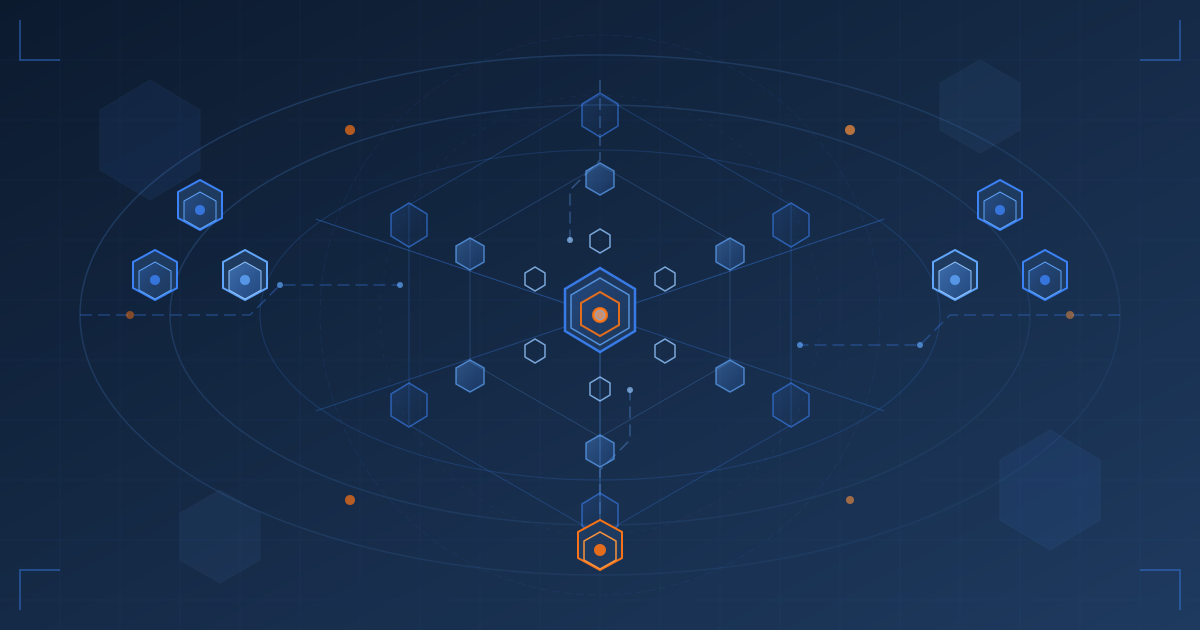
Cortex has 5 specialist masters, each focused on a domain:
Development Master
- Feature implementation
- Bug fixes
- Code refactoring
- Technical improvements
Security Master
- Vulnerability scanning
- CVE remediation
- Security audits
- Compliance checks
Inventory Master
- Repository discovery
- Metadata cataloging
- Documentation generation
- Dependency tracking
CI/CD Master
- Build automation
- Test orchestration
- Deployment strategies
- Release workflows
Coordinator Master
- Task routing (meta!)
- Master coordination
- System orchestration
- High-level decisions
The Learning Loop
Here’s where it gets interesting. After each task execution:
- Outcome tracking - Did the task succeed? How long did it take?
- Pattern extraction - What characteristics led to success/failure?
- Confidence adjustment - Update routing confidence for similar tasks
- Knowledge persistence - Store patterns for future use
Over time, the system gets better at:
- Recognizing task patterns
- Choosing the right expert
- Avoiding poor routing decisions
- Handling edge cases
A Real Example
Let’s walk through a task: “Fix bug in user authentication causing login failures”
Step 1: Analysis
Task: "Fix bug in user authentication causing login failures"
Keywords: fix, bug, authentication, login, failures
Category: Bugfix
Domain: Development + Security
Step 2: Expert Selection
Coordinator calculates confidence:
- Development Master: 0.85 (bugfix, code changes)
- Security Master: 0.65 (authentication, security concern)
- CI/CD Master: 0.15 (might need testing)
- Inventory Master: 0.05 (not relevant)

Selected: Development Master (highest confidence)
Step 3: Execution
Development master spawns implementation worker:
- Analyzes authentication code
- Identifies the bug
- Implements fix
- Runs tests
- Creates pull request
Step 4: Learning
Outcome: Success (0.95 quality score)
Duration: 12 minutes
Pattern: "authentication bug" → Development Master ✓

Update routing confidence:
- Similar "auth bug" tasks → Development Master +0.02
- Store pattern for future reference
Next Time
When a similar task arrives:
Task: "Authentication token expiration issue"
Confidence: Development Master now 0.87 (learned!)
Benefits of the MoE Approach
1. Specialization
Each master focuses on what it does best. No jack-of-all-trades, master-of-none.
2. Scalability
Add new experts without retraining the entire system. Want a “Documentation Master”? Just plug it in.
3. Interpretability
You can see exactly which expert was chosen and why. No black box decisions.
4. Continuous Improvement
The system gets smarter with every task. Your 100th task is routed better than your 1st.
5. Graceful Degradation
If an expert fails, fall back to alternative experts or general-purpose routing.
Traditional ML vs. Cortex’s MoE
Traditional MoE (Research Papers)
# Neural network with multiple expert layers
gating_weights = softmax(gating_network(input))
expert_outputs = [expert_i(input) for expert_i in experts]
final_output = sum(weight * output for weight, output in zip(gating_weights, expert_outputs))
Cortex’s MoE (Production Reality)
// Pattern-based routing with learning
const confidence = calculateConfidence(task, masters);
const selectedMaster = selectBestMaster(confidence);
const result = await selectedMaster.execute(task);
await learnFromOutcome(task, selectedMaster, result);
Cortex uses a hybrid approach:
- Pattern matching for interpretable routing
- Confidence scoring like neural networks
- Learning from outcomes to improve over time
- Rule-based fallbacks for safety
Beyond Software: MoE Everywhere
The MoE pattern applies beyond Cortex:
- Customer Support: Route tickets to specialists based on issue type
- Content Moderation: Different models for text, images, videos
- Medical Diagnosis: Specialists for different symptoms/conditions
- Financial Analysis: Experts for different market sectors
What’s Next for Cortex?
Check out the latest developments in the Cortex blog to see how the platform continues to evolve with autonomous agents, advanced reasoning, and production-grade governance.
Key Takeaways
- MoE = Multiple specialists + Intelligent routing + Continuous learning
- Gating network decides which expert handles each task
- Specialists focus on what they do best
- The system improves over time through outcome tracking
- Cortex applies MoE to software development orchestration
Learn More About Cortex
Want to dive deeper into how Cortex works? Visit the Meet Cortex page to learn about its architecture, capabilities, and how it scales from 1 to 100+ agents on-demand.